

By Daniel Badre, Badre Law Professional Corporation
Navigating the landscape of car accident claims in Ontario can be complex, especially when distinguishing between Statutory Accident Benefits (SABS) and Tort claims. This guide will provide an in-depth understanding of these claims and their significant implications on insurance rates. Whether you’re a victim of a car accident or seeking information to assist someone affected, this article will clarify the differences, eligibility, and the claims process for both systems. You’ll learn about statutory benefits designed to support immediate needs, alongside tort claims offering recovery for pain and suffering or property damage. Additionally, we will analyze how these claims influence auto insurance premiums, ultimately empowering you with knowledge to make informed decisions.
Understanding SABS and Tort Claims in Ontario
Understanding the types of car accident claims available in Ontario is crucial for anyone involved in an incident. This overview will clarify the definitions of SABS and Tort claims, emphasizing the importance of knowing each system and its implications for drivers and victims.
Definitions
Statutory Accident Benefits (SABS) are no-fault benefits available to all individuals injured in a car accident, providing quick financial assistance for medical expenses, rehabilitation, and income replacement. In contrast, Tort claims are fault-based; they allow victims to sue the responsible party for damages such as pain and suffering, thereby offering compensation beyond immediate expenses.
Differences
The primary difference between SABS and Tort claims lies in their structure. SABS operates under a no-fault system, meaning benefits are available regardless of who is at fault. Tort claims, however, rely on proving negligence and fault, which can prolong the claim process. SABS typically covers medical and rehabilitation costs, while Tort claims include compensation for pain and suffering, loss of enjoyment, and other damages.
Eligibility Requirements
Eligibility for SABS includes being involved in an accident in Ontario, regardless of fault, and suffering a personal injury. For Tort claims, eligibility requires proving that another party was at fault for the accident, which necessitates a clear establishment of liability.
For those unfamiliar with the legal landscape, seeking the assistance of a professional service like Badre Law can help navigate these eligibility criteria effectively.
Claim Process
The claim process for both systems can be intricate. For SABS, the injured party must complete a benefit application within a specified time frame post-accident, while Tort claims require gathering evidence to support a case against the negligent party. Engaging an experienced legal representative can facilitate a smoother experience in managing the necessary paperwork and documentation.
Timelines
Timelines for filing claims vary significantly between SABS and Tort claims. Typically, individuals must report an accident to their insurance company within seven days, and SABS claims usually require submission within 30 days for initial benefits. Tort claims, on the other hand, can take several months to years to resolve, depending on court schedules and negotiations.
Impact on Insurance Rates
Filing claims can have varying effects on auto insurance rates. SABS claims, being no-fault, generally do not impact future premiums adversely. Conversely, a Tort claim can lead to an increase in premiums, as insurers may perceive the driver as a higher risk, which could ultimately lead to costly increases in insurance rates.
What Are Statutory Accident Benefits in Ontario?
Statutory Accident Benefits provide essential financial support to individuals injured in car accidents without the need for proof of fault. SABS include several types of benefits aimed at aiding recovery and covering expenses, such as medical and rehabilitation costs, income replacement benefits, and non-earner benefits for those who can no longer earn a living.
Research into the regulatory framework of Ontario’s insurance system highlights the foundational purpose of these benefits in supporting recovery for injured parties.
Evidence-Based Claims Adjudication in Ontario: Prioritizing Care in Motor Vehicle Accidents The Statutory Accident Benefits Schedule (SABS) delineates the benefits and compensation available to individuals who have sustained injuries resulting from a motor vehicle accident. Evidence-based Claims Adjudication of Traffic Injury Claims in Ontario: Shifting the Focus from Cost to Care, R Power, 2020
These benefits are designed to help individuals cope with the aftermath of an accident, ensuring they receive the necessary care without the burden of financial stress.
How Does the Tort Claim Process Work for Ontario Car Accident Victims?
The Tort claim process is distinct from the SABS route, focusing on establishing fault and liability. To initiate a Tort claim, an injured victim must gather pertinent evidence, including police reports and eyewitness accounts, to build a strong case against the at-fault driver.
The process typically involves:
- Investigation: Gathering medical records and other evidence.
- Negotiation: Attempting to settle with the insurance company before going to court.
- Litigation: If a fair settlement cannot be reached, pursuing the claim through the courts.
Understanding these steps can significantly impact the outcome of pursuing a Tort claim.
How Can Collision Reports Support Car Accident Claims in Ontario?
Collision reports play a vital role in supporting accident claims by providing an official account of the accident. These reports include crucial details about the incident, such as the conditions at the time of the accident, involved parties, and potential witnesses.
Such documentation is essential for establishing fault in Tort claims and is also useful in substantiating the need for SABS benefits, ensuring that the claims are processed efficiently. By having accurate collision reports, claimants can strengthen their position whether pursuing SABS or Tort claims.
How do collision reports strengthen SABS and Tort claims?

Collision reports reinforce both SABS and Tort claims by providing an official narrative of the accident. In SABS claims, these reports help validate the injury claims and necessity for benefits, while in Tort claims, they serve as a primary source of evidence supporting the claimant’s argument regarding the other party’s liability.
Through clear documentation of events, collision reports can clarify ambiguities and contribute to more substantial settlements, representing a crucial element in the claims process.
Beneficial Aspects of SABS vs. Tort Claims
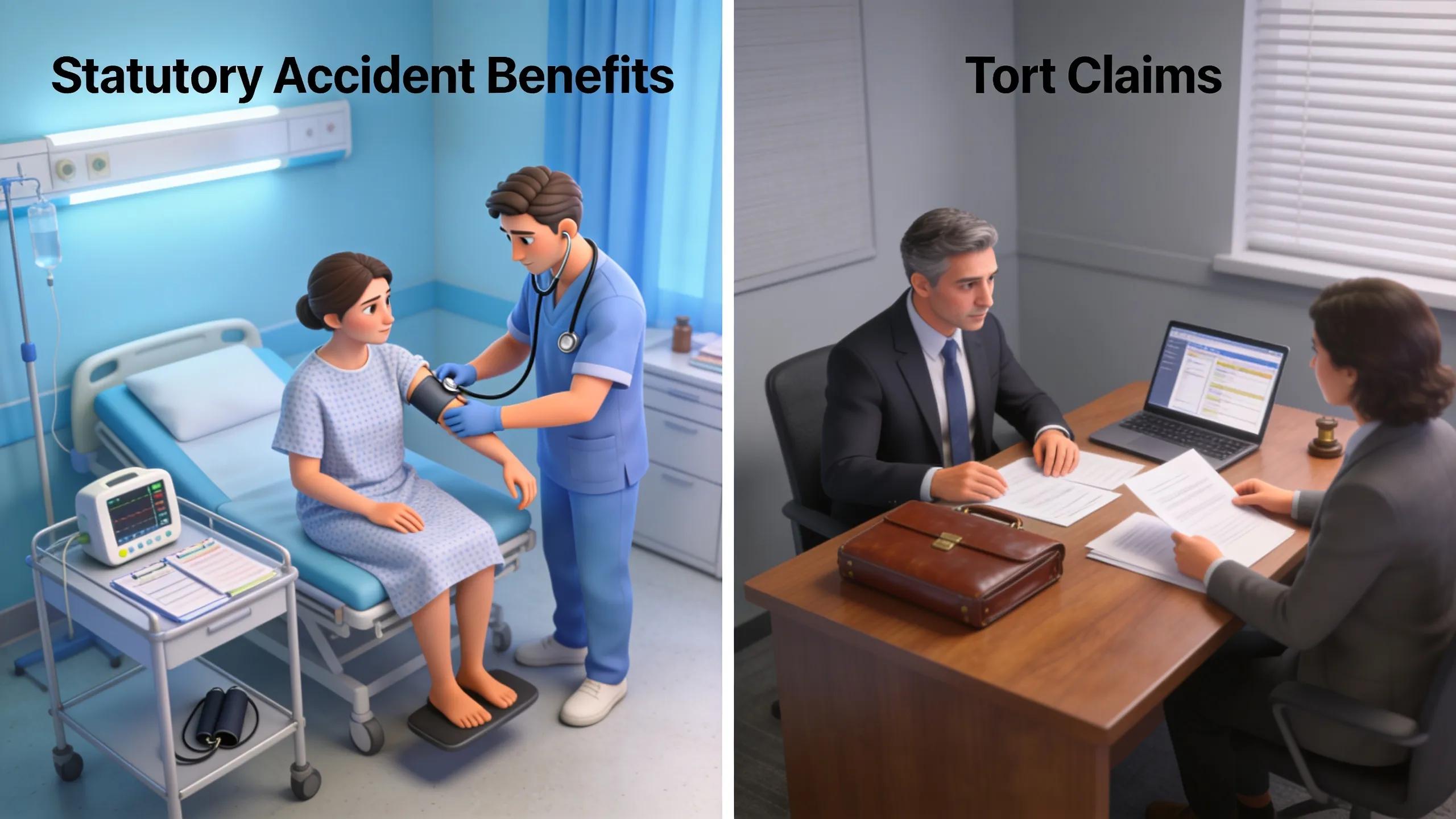
To better illustrate the differences between SABS and Tort claims, the following table outlines the key benefits and implications for claimants.