


A brain injury occurs when external force or internal medical events damage the brain’s structure or function, and understanding legal options is essential for securing treatment, income support, and long-term care. This article explains how brain injury types—from concussion to diffuse axonal injury and acquired injuries like stroke—affect evidence needs, timelines, and compensation under Ontario law, and it guides readers through the brain injury claim process in Canada. Readers will learn practical steps to preserve evidence, the statutory timelines that affect claims, how damages are calculated, and when specialized legal help materially improves outcomes. The guide maps key topics: injury types and legal implications, the Ontario claim process, typical compensation categories, when to hire a lawyer in Ottawa, statutory benefits and rehabilitation supports, and concise answers to frequently asked questions. Throughout, terms like Traumatic Brain Injury (TBI), Acquired Brain Injury (ABI), statutory accident benefits, and future care costs are used to link medical evidence with legal strategy so readers can act promptly and with clarity.
Badre Law Professional Corporation assists brain injury victims in Ottawa and across Ontario with personal injury representation, offering free consultations and a contingency fee model described as “No fees until you win.” The firm provides client-focused support—professionalism, honesty, transparency, and compassionate client care—while coordinating medical experts and rehabilitation planning when needed. If you are exploring legal options after a suspected brain injury, an initial, no-cost case review can clarify deadlines, evidence needs, and potential compensation pathways. This brief firm mention is intended to help readers know a local resource exists while keeping the main focus on the legal and medical information that informs decision-making.
What Are the Different Types of Brain Injuries and Their Legal Implications?

Brain injuries fall into categories that determine medical evaluation, causation evidence, and likely compensation, so distinguishing types early helps tailor legal strategy. Legal implications hinge on how the injury occurred, the objective medical findings (imaging, neuropsychology), and functional impact on work and daily life; these factors shape liability proof and damages claims. Understanding whether an injury is a Traumatic Brain Injury (TBI), an Acquired Brain Injury (ABI), or a mild concussion guides which experts—neurologists, neuropsychologists, rehabilitation specialists—are retained to document deficits and forecast future care. The next sections define common types and explain typical evidence and legal considerations for each.
What Is Traumatic Brain Injury and How Does It Affect Legal Claims?
Traumatic Brain Injury (TBI) results from an external mechanical force—such as a motor vehicle collision, fall, or assault—that disrupts normal brain function and can range from mild concussion to severe coma. Legally, TBI claims rely on objective medical records (CT/MRI scans), emergency department notes, and serial neuropsychological assessments that document cognitive, emotional, and functional decline over time. Severity directly influences damages: milder TBIs often yield statutory accident benefits and modest tort recoveries, while moderate-to-severe TBI claims may require detailed future care plans and life-care costing. Establishing causation often requires linking the timing of symptoms to the incident and ruling out pre-existing conditions, which is why early documentation and specialized testing are crucial.
Lésions cérébrales traumatiques légères (commotion cérébrale) : impacts à long terme, perspectives juridiques et médicales
Historiquement, deux positions divergentes sur l’impact à long terme des lésions cérébrales traumatiques légères (LCTL), également appelées couramment commotion cérébrale (Ruff, Iverson, Barth, Bush, & Broshek, 2009), existaient dans la littérature scientifique. Une position soutenait qu’un faible pourcentage de patients atteints de LCTL éprouvent des problèmes durables pour des raisons physiogènes (c’est-à-dire médicalement vérifiables, neurologiques ou physiques). La seconde opinion était que les problèmes résiduels découlant des LCTL sont davantage psychogènes (c’est-à-dire médicalement non vérifiables, non neurologiques ou psychologiques).
What attorneys and factfinders need to know about mild traumatic brain injuries, 2019
How Do Acquired Brain Injuries Differ in Legal Treatment?
Acquired Brain Injury (ABI) includes non-traumatic causes such as stroke, hypoxia, infection, or medical error, and these origins change the evidentiary focus in legal claims by emphasizing medical causation and healthcare records. ABI claims often turn on establishing negligence or breach in medical settings or demonstrating linkage between an external event (e.g., workplace exposure) and subsequent brain dysfunction, so medical charts, physician notes, and expert opinions take center stage. Prognosis and rehabilitation trajectories for ABI can differ significantly from TBI; therefore, future care costs, attendant care, and vocational rehabilitation evidence may require different expert inputs. For both ABI and TBI, consistent neuropsychological profiles that align with reported functional impairments strengthen entitlement to comprehensive compensation.
Coûts directs des soins de santé liés aux lésions cérébrales acquises en Ontario
Les lésions cérébrales acquises (LCA), d’origine traumatique ou non traumatique, sont une cause majeure d’invalidité à l’échelle mondiale, mais la recherche résumant le fardeau économique pour le système de santé associé aux LCA est limitée. L’objectif de cette étude était de déterminer le coût direct des services de santé financés par les fonds publics, de l’hospitalisation initiale jusqu’à trois ans après la blessure, pour les personnes atteintes de lésions cérébrales traumatiques (LCT) et non traumatiques (LCNT) en Ontario, Canada.
Direct cost associated with acquired brain injury in Ontario, 2012
How Does the Brain Injury Claim Process Work in Ontario?
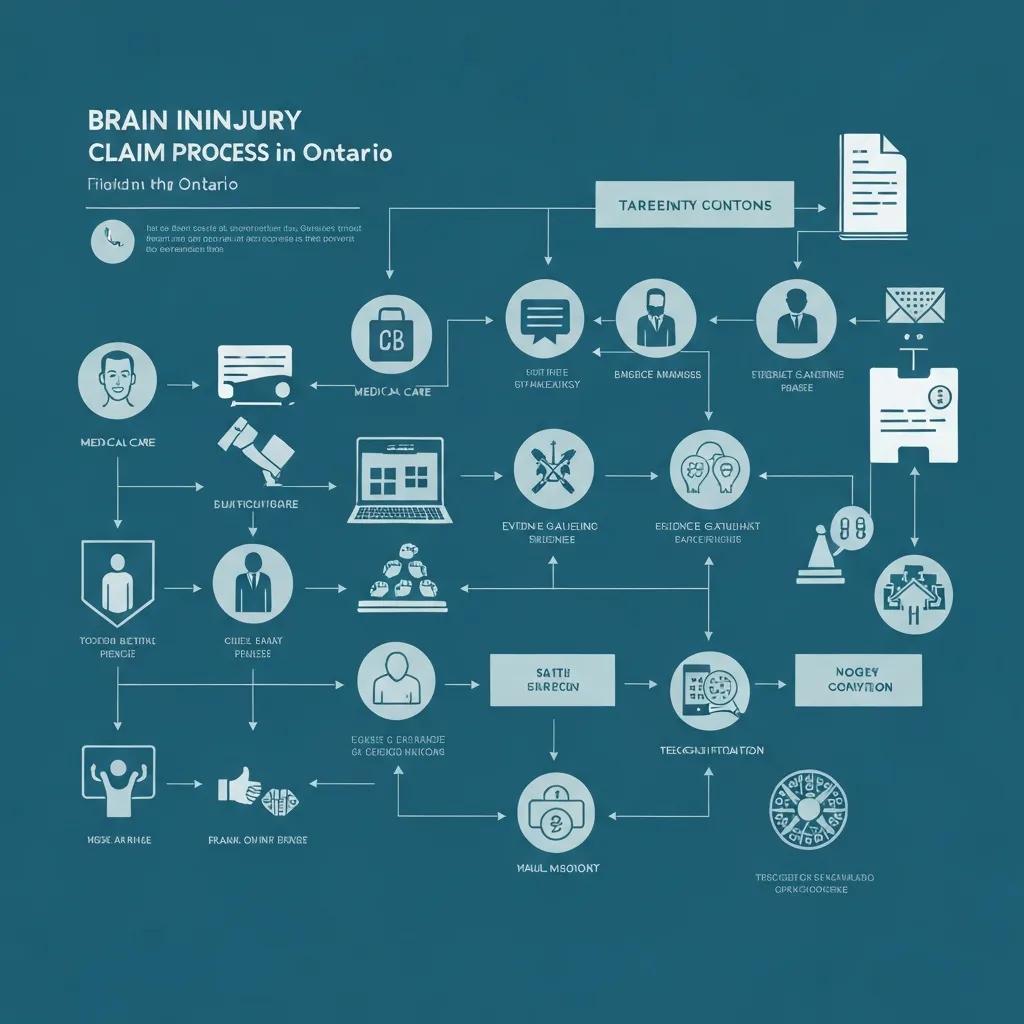
The brain injury claim process in Ontario follows discrete stages—from early medical care through potential negotiation or trial—and each stage demands specific documentation and timelines to protect the claimant’s rights. Early stages prioritize immediate medical assessment, incident reporting, and preservation of evidence, while mid-stage actions focus on obtaining expert reports and quantifying damages; final stages involve negotiation or court proceedings if settlement is not achievable. Understanding the Ontario context—statutory accident benefits for motor vehicle collisions, litigation procedures for tort claims, and limitation rules—helps claimants and their counsel plan for interim supports and long-term financial needs. The ordered steps below summarize practical actions and approximate timing to guide an informed response after a brain injury.
- Seek Immediate Medical Care: Obtain emergency and follow-up medical records that document symptoms, diagnoses, and treatment plans.
- Report the Incident: Notify applicable insurers and employers promptly to start benefit entitlements and preserve records.
- Initial Legal Consultation: Consult a brain injury lawyer to assess liability, deadlines, and evidence-gathering needs.
- Evidence Gathering: Collect diagnostic imaging, neuropsychological testing, wage records, and witness statements.
- Expert Reports & Future Care Plans: Commission neurologists, neuropsychologists, and life-care planners to quantify long-term needs.
- Negotiation & Settlement Attempts: Counsel engages insurers in structured negotiation using compiled evidence and expert opinions.
- Litigation: If negotiation fails, prepare pleadings, disclose records, and proceed to trial with retained experts as witnesses.
These stages usually overlap, and acting early—especially on medical assessment and legal consultation—reduces the risk of missed deadlines and weaker evidence, which increases the chance of favorable outcomes.
This stage mapping shows how parallel actions—medical, administrative, and legal—must be coordinated to preserve claims and to support accurate valuation and negotiation.
What Are the Key Steps in Filing a Brain Injury Claim?
Filing a brain injury claim starts with establishing medical causation and documenting ongoing impairments, then proceeds through claim intake, expert retention, and formal claims submissions with insurers or pleadings in court. Key early actions include preserving imaging and neuropsychological test results, gathering wage and employment records, and obtaining statements from treating clinicians to demonstrate functional limitations. As the claim develops, retaining rehabilitation specialists and vocational experts helps quantify future care and lost earning capacity, which in turn informs settlement negotiations or litigation asks. Timely legal action that coordinates these steps increases the likelihood of securing statutory accident benefits where applicable and a comprehensive damages package in tort claims.
How Does the Statute of Limitations Affect Brain Injury Claims in Ontario?
Ontario’s basic civil limitation rule typically requires a plaintiff to commence a claim within two years of the incident or discovery of injury, but brain injury claims commonly involve discovery issues that can extend when the limitation period begins. The “discovery rule” recognizes that some brain injuries—especially mild TBIs, concussions, or ABI with delayed symptoms—may not be clearly identified immediately, so the clock can run from the date the injury was discovered or reasonably ought to have been discovered. Catastrophic designations and statutory accident benefit claims follow their own administrative deadlines, making early legal advice essential to avoid forfeiting rights. Acting quickly to document symptoms and obtain legal counsel preserves options and helps navigate exceptions or applications for relief where appropriate.
What Compensation Can Brain Injury Victims Expect in Canada?
Compensation for brain injury victims in Canada typically falls into economic damages, non-economic damages, and future care costs; each category has distinct proof requirements and valuation methods. Economic damages cover past and future medical expenses, lost wages, and rehabilitation costs and are supported by receipts, wage records, and expert life-care cost analyses. Non-economic damages address pain and suffering and loss of life enjoyment and are assessed by severity, duration, and functional impact; credible medical evidence and objective testing strengthen higher awards. Future care costs require detailed life-care plans and actuarial or expert costing to estimate attendant care, home modifications, and ongoing therapies; these elements often form the core of catastrophic brain injury claims.
Before the table, this paragraph explains that the following comparison clarifies what each compensation category covers and the typical evidence required to support claims in Ontario and across Canada.
This comparison highlights that economic damages are documentary, non-economic damages rely on clinical severity and functional evidence, and future care costs require specialized life-care planning to support long-term funding needs.
How Are Economic and Non-Economic Damages Calculated?
Economic damages are quantified using past receipts and expert projections of future costs, with lost earning capacity often calculated by comparing pre-injury earnings to realistic post-injury employability assessments conducted by vocational experts. Non-economic damages, sometimes referred to as general damages, are assessed by courts or negotiated settlements based on the severity, permanence, and life-impacting nature of the brain injury; credible neuropsychological reports and corroborating functional assessments increase award likelihood. For future care, life-care planners produce itemized cost estimates that lawyers convert into present-value figures for settlement or structured awards. Accumulating high-quality, consistent medical and expert documentation is central to maximizing recoverable compensation across all categories.
What Factors Influence Traumatic Brain Injury Settlements?
Settlement values for TBI claims depend on injury severity, strength of liability, quality of medical documentation, expert testimony reliability, pre-existing conditions, and available insurance limits; each factor shifts valuation considerably. Courts and insurers weigh objective imaging and validated neuropsychological testing heavily, while demonstrable impact on work, relationships, and daily living drive higher compensation for non-economic loss. Comparative fault principles and contributory factors may reduce recoverable amounts, and statutory caps or insurance policy limits can constrain practical recoveries regardless of theoretical entitlement. Understanding these drivers helps claimants and counsel prioritize actions—timely expert retention, comprehensive medical records, and clear functional documentation—to improve negotiation positioning.
When and Why Should You Hire a Brain Injury Lawyer in Ottawa?
You should consider hiring a brain injury lawyer as soon as medical stabilization is achieved, because early legal involvement helps preserve evidence, secure interim benefits, and coordinate expert assessments essential for strong claims. Specialized brain injury counsel brings familiarity with neuropsychological evidence, life-care planning, statutory accident benefits protocols, and litigation strategies tailored to catastrophic injury cases, which can materially influence both access to rehabilitation and compensation outcomes. For Ottawa and Ontario claimants, local counsel adds knowledge of provincial rules and local expert networks, improving coordination with treating clinicians and service providers. The next subsection outlines the qualifications and service features to look for when selecting counsel.
When deciding to retain representation, consider these reasons to hire specialized counsel early:
- Preserve Evidence and Deadlines: A lawyer ensures prompt collection of records and compliance with limitation periods.
- Access to Expert Networks: Counsel can engage neurologists, neuropsychologists, and life-care planners to build a robust case.
- Maximize Compensation: Experienced negotiation and litigation strategies increase the likelihood of full economic and non-economic recovery.
Hiring counsel early reduces uncertainty and helps align medical recovery with legal strategy so claimants are positioned to secure both interim supports and long-term funding.
What Makes a Brain Injury Lawyer the Best Choice for Your Case?
The best brain injury lawyers combine subject-matter expertise—experience with TBI and ABI claims—with a multidisciplinary approach that coordinates medical experts, rehabilitation planners, and vocational specialists to quantify damages accurately. Key indicators of strong representation include demonstrated experience managing catastrophic impairment files, established relationships with neuropsychologists and life-care planners, transparent communication practices, and a client-centred approach to explain complex medical-legal interactions. Effective counsel will also guide access to statutory accident benefits and interim supports while building evidence for long-term claims, reducing stress on clients during recovery. Choosing a lawyer who integrates these elements improves both care access and the likelihood of securing appropriate compensation.
How Does Badre Law Support Brain Injury Victims with No Fees Until You Win?
Badre Law Professional Corporation operates on a contingency fee model for personal injury clients, meaning clients do not pay legal fees unless the firm achieves a successful settlement or judgment, which reduces financial barriers to accessing representation during recovery. The firm offers a free initial consultation to review the facts, assess potential statutory accident benefits, and outline immediate evidence-preserving steps a claimant should take; this no-cost intake helps clients understand legal options without upfront expense. Badre Law emphasises client-centred care—professionalism, honesty, transparency, and compassionate support—and coordinates medical expert involvement and rehabilitation planning to support both recovery and claim valuation. If you wish to request a free case review, the office can provide an initial assessment to clarify deadlines and next steps for pursuing statutory benefits or a tort claim.
What Are the Legal Rights and Resources Available for Brain Injury Victims in Ontario?
Ontario law provides statutory accident benefits for eligible motor vehicle collisions, mechanisms to pursue tort compensation against responsible parties, and catastrophic impairment designations that increase benefit levels for severe brain injuries, all of which interact with rehabilitation and long-term care planning. Victims may secure interim rehabilitation funding through insurer benefits while a long-term settlement is pursued, and structured settlements or lump-sum awards are tools to fund ongoing attendant care and home modifications. Community resources and national organizations focused on brain injury provide rehabilitation referrals and education, which lawyers can coordinate with medical experts to ensure comprehensive life-care planning. The next subsections outline typical statutory benefit categories and how legal processes can fund rehabilitation and long-term care.
What Statutory Accident Benefits Are Available for Catastrophic Brain Injuries?
Statutory accident benefits in Ontario include coverage for medical and rehabilitation expenses, attendant care, and income replacement, with catastrophic designations elevating benefit entitlements where severe, permanent impairment is established. Obtaining a catastrophic designation requires medical evidence and often neuropsychological and functional assessments that document significant limitations across daily activities, mobility, or cognition. Lawyers assist claimants in navigating insurer applications, appeals, and coordinating the required expert documentation to maximize benefit levels. Early legal engagement helps secure interim rehab funding and ensures benefit denials or underpayments are challenged promptly to prevent gaps in necessary services.
How Can Rehabilitation and Long-Term Care Be Supported Legally?
Legal mechanisms to fund rehabilitation and long-term care include statutory benefits, negotiated settlements, lump-sum awards, and structured settlements tailored to provide indexed, ongoing funding for attendant care and therapies. Life-care plans prepared by rehabilitation specialists itemize future needs, which lawyers convert into present-value claims and negotiate with insurers or present at trial to obtain funds for home modifications, assistive devices, and long-term attendant services. Counsel also works to coordinate multidisciplinary supports—physicians, therapists, vocational rehab providers—and to structure settlements that minimize administrative burdens while preserving funds for future needs. Effective legal planning integrates medical prognoses with financial structures to ensure sustainable support over a claimant’s lifetime.
What Are the Most Frequently Asked Questions About Brain Injury Lawyer Services?
Claimants commonly ask about case value, timelines, and what to expect from legal representation; direct answers can help set realistic expectations while preserving individualized assessment as essential. The following concise answers provide a general framework for typical enquiries, emphasizing that each case is unique and recommending early legal consultation to obtain a case-specific valuation. The subsequent short items respond to two core PAA topics: case worth and claim duration, with practical caveats and action steps.
- How much is a brain injury case worth in Ontario?: Case value depends on severity, demonstrable impact on life and work, availability of expert evidence, and insurance limits; values range widely, and individualized assessment is necessary.
- How long does a brain injury claim take to resolve?: Typical timelines vary from two to four years or longer depending on complexity, need for medical stabilization, and whether litigation is required.
- What should I bring to an initial consultation?: Bring medical records, imaging reports, employment history, and any incident reports to help counsel quickly assess liability and damages.
These brief answers aim to clarify expectations and encourage prompt documentation and legal review, which often materially improves claim readiness and potential outcomes.
How Much Is a Brain Injury Case Worth in Ontario?
Estimating a brain injury case value requires reviewing injury severity, medical and neuropsychological evidence, lost earnings, and future care needs; therefore, generalized ranges are unreliable without case-specific expert input. Factors that increase value include objective imaging findings, persistent cognitive or physical disability, young age with long-term care needs, and strong expert testimony linking injury to functional deficits. Conversely, pre-existing conditions, weaker causation evidence, or limited insurance exposure can reduce recoverable amounts. For an accurate appraisal, obtain a professional case review that considers life-care costs, vocational losses, and non-economic impacts tailored to the claimant’s prognosis.
How Long Does a Brain Injury Claim Take to Resolve in Canada?
Resolution timelines typically span two to four years for many claims, reflecting the time needed for medical stabilization, expert evaluations, negotiation, and, if necessary, litigation, though individual cases can be shorter or substantially longer. Factors that lengthen timelines include disputed liability, complex causation (e.g., ABI with medical factors), extensive future care quantification, and court backlogs; conversely, early settlement can occur where liability is clear and damages are readily quantifiable. While a claim proceeds, legal counsel can often secure interim benefits and rehabilitation funding to reduce financial strain and support recovery during the process.